
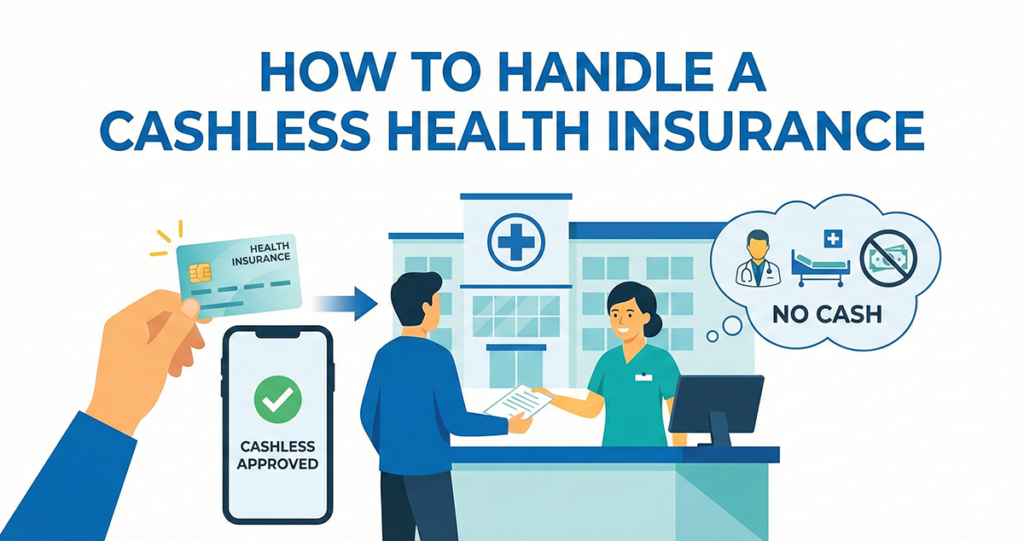
Your complete guide to navigating cashless claim suspension, arranging funds, and filing for reimbursement
Health insurance is meant to reduce financial stress during emergencies — especially through cashless treatment, where the insurer directly settles the bill with the hospital. But in recent months, many policyholders have faced a worrying trend: hospitals temporarily suspending cashless facilities, forcing families to make upfront payments even when they hold valid insurance.
If you ever face such a situation, knowing what steps to take can save you time, money, and unnecessary panic. This blog simplifies the entire process from what to do when & How to Handle a Cashless Health Insurance or treatment is denied, how to manage funds, and how to file a reimbursement claim smoothly.
What Is Cashless Health Insurance & Why Hospitals Sometimes Refuse It? How to Handle a Cashless Health Insurance
Under normal circumstances, a cashless insurance facility means the insurer pays the hospital directly for all admissible treatments. The patient only bears charges that are not covered under the policy (such as consumables, registration fees, etc.).
Hospitals may suspend cashless treatment due to:
- Delayed payments from insurers
- Disagreements over reimbursement rates
- Operational issues with the TPA (Third Party Administrator)
- Compliance or paperwork discrepancies
- High claim volumes and audit delays
While disputes often resolve quickly, they create temporary hardship for patients who suddenly need to arrange funds at short notice.
What to Do When Cashless Claim Is Denied? — Step-by-Step Guide
1. Stay Calm — Treatment Will Not Stop
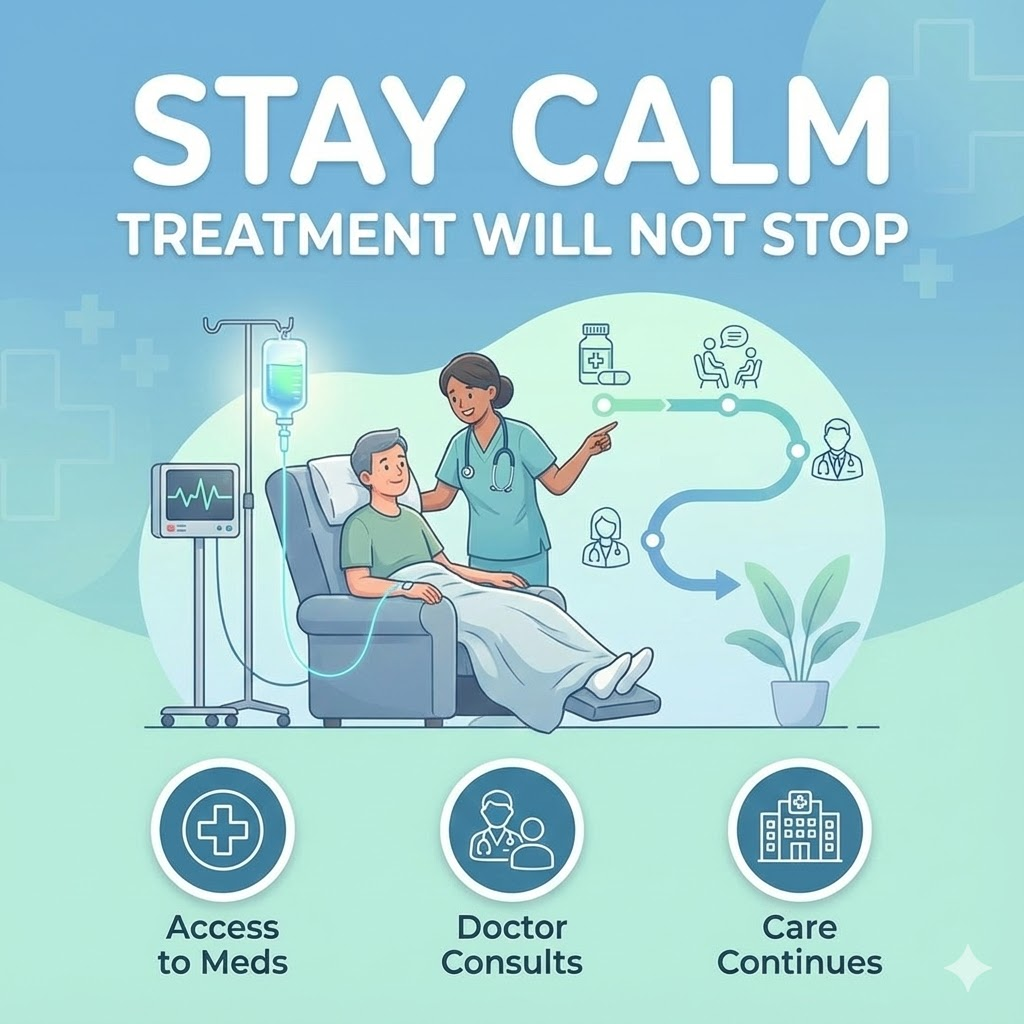
A denial of cashless facility does not mean your treatment is refused. Hospitals are legally required to continue emergency treatment. Only the payment mode changes.
Take a breath, cooperate with the hospital team, and follow the next steps.
2. Ask for Written Confirmation
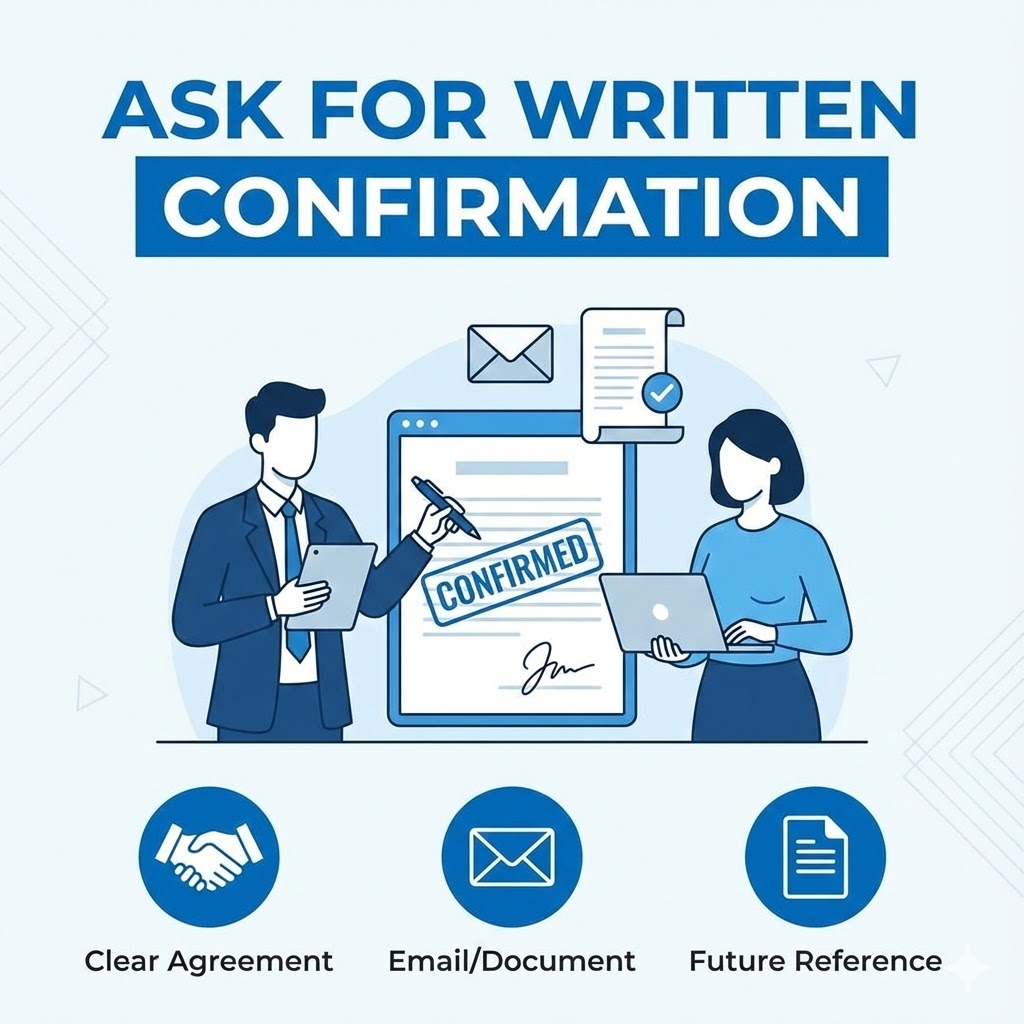
Request these documents from the hospital’s TPA/insurance desk:
- A written note/email explaining why cashless treatment was denied
- The last communication sent to the insurer
- Details of the documents that were pending (if any)
This written proof helps in faster reimbursement and avoids disputes later.
3. Contact Your Insurance Helpline Immediately

Call your insurer or TPA and:
- Report the denial
- Verify the status of your cashless request
- Ask whether they can speak to the hospital directly
- Seek guidance on the next steps
Always note the call reference number for your records.
4. Arrange Funds for Treatment (If Needed)
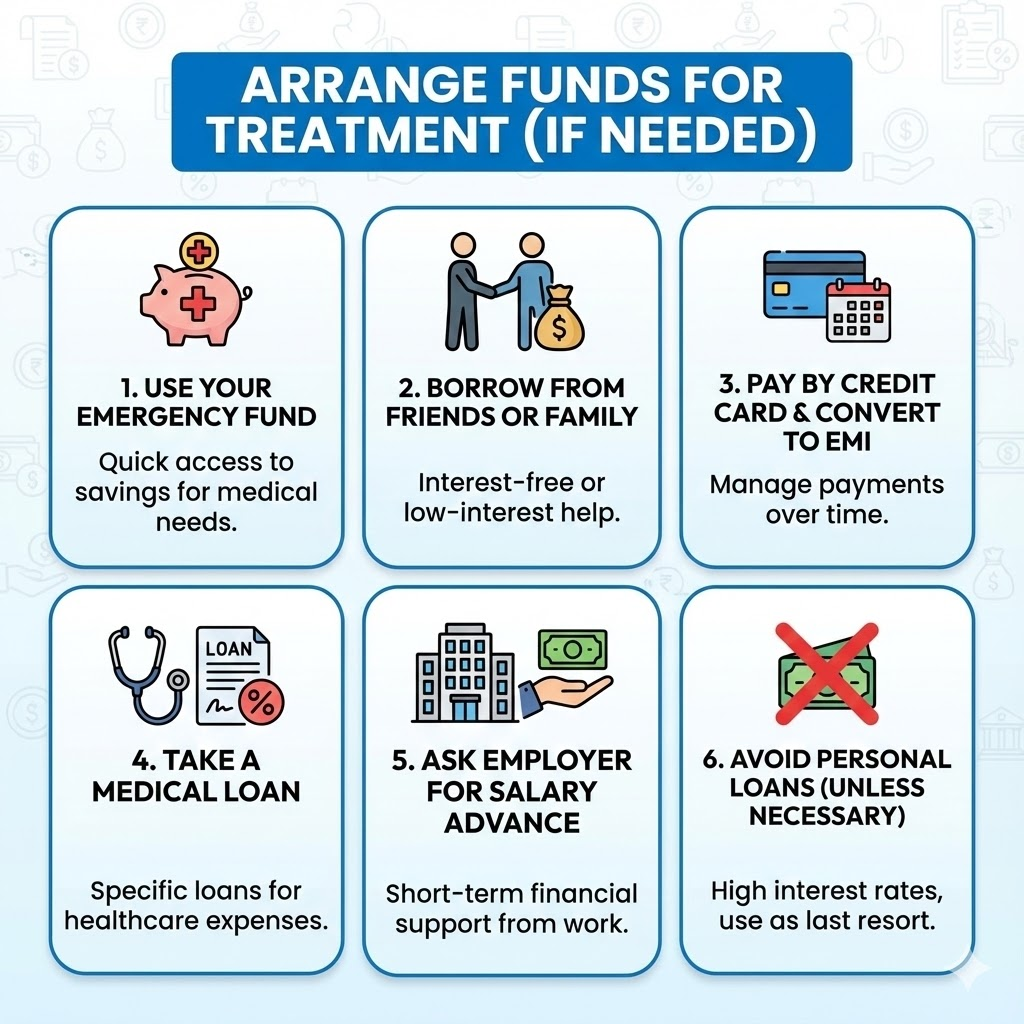
If cashless treatment remains unavailable, you’ll need to temporarily arrange funds.
Here are the safest and fastest options:
a) Use Your Emergency Fund
This is the simplest way to manage sudden medical expenses without debt.
b) Borrow From Friends or Family
Short-term borrowing prevents interest charges and reduces financial burden.
c) Pay by Credit Card & Convert to EMI
If the bill is large, credit cards can help you pay instantly and convert to low EMI.
d) Take a Medical Loan
Many banks and fintech lenders offer:
- Instant approvals
- Low documentation
- Zero-cost EMI options
e) Ask Employer for Salary Advance
Several organisations offer emergency medical salary advances at zero interest.
f) Avoid Personal Loans (Unless Necessary)
High interest rates make them a last-resort option.
5. Keep All Documents Safely
For reimbursement claims, documentation is everything. Maintain:
- All hospital bills
- Prescriptions
- Diagnostic reports
- Discharge summary
- Advance payment receipts
- ID proofs
- Copies of communication with insurer and hospital
Make photocopies or scans and keep them organised.
6. File Your Reimbursement Claim Promptly
Once treatment is complete:
- Submit your reimbursement claim as soon as possible
- Insurers must settle claims within 30 days under IRDAI rules
- Ensure every form is filled accurately
- Double-check bills, prescriptions, and doctor notes for consistency
If the insurer needs additional documents, ask them to share it in writing.

How to Manage Funds at Short Notice (Detailed Guide)
When hospitals suddenly refuse cashless treatment, arranging money becomes stressful. Here is a deeper look at the safest short-term financial options:
1. Emergency Fund
If you maintain 3–6 months of expenses as an emergency fund, it will cover:
- Initial hospital deposits
- Surgery advances
- ICU or critical care charges
This should always be your first source.
2. Borrowing from Family/Friends
Interest-free assistance can temporarily bridge the gap until the insurer reimburses the amount.
3. Credit Cards
Pay the hospital bill instantly and convert it to manageable EMIs.
If available, choose:
- Zero-cost EMI
- Low-interest EMI plans
4. Medical Loan
Banks & NBFCs offer:
- Quick disbursal
- Digital processing
- Same-day approval
- Low interest (in many cases)
5. Salary Advance
Many companies allow employees to take an advance against their salary, which is deducted over the next few months.
6. Avoid High-Interest Loans
Never rush to take unsecured loans unless all other options are exhausted.
How to Raise a Cashless Claim Properly (For Future Admissions)
To avoid denial next time, follow these steps:
1. Choose a Network Hospital
Always select hospitals listed under your insurer’s approved network.
2. Check Policy Exclusions and Limits
Read terms related to:
- Consumables
- Sub-limits
- Waiting periods
- Room rent caps
3. Pre-Authorisation for Planned Procedures
For scheduled surgeries:
- Send preauthorization request 48–72 hours before admission.
- Provide all documents the hospital requests.
4. Emergency Hospitalisation
Submit the request within 24 hours of getting admitted.
5. Provide All Documents on Time
The hospital submits them to the insurer for approval.
6. Pay for Non-Covered Items
Consumables, registration charges, and admin fees are often excluded.
7. Reimbursement if Claim Is Denied
If the hospital is not in-network or cashless is denied, you can:
- Pay the expenses
- File for reimbursement with all original bills
Grievance Redressal If Claim Issues Arise
If your claim is delayed or denied unfairly, here is your escalation path:
1. Internal Grievance Cell
File a complaint with your insurer/TPA’s Grievance Redressal Officer.
They must:
- Acknowledge within 3 days
- Resolve within 15 days
2. IGMS (Integrated Grievance Management System)
If no action is taken, escalate your complaint at:
3. Insurance Ombudsman
Approach the Ombudsman if the insurer does not respond in 30 days or you are unhappy with the resolution.
They handle disputes up to ₹30 lakh.
4. Consumer Court
If the dispute amount is higher or you need legal remedy, you may file a case in district, state, or national consumer court.
FAQs (Frequently Asked Questions)
Why do hospitals suddenly deny cashless insurance?
Hospitals may deny cashless claims due to operational delays, insurer-hospital disputes, incorrect paperwork, or pending approvals from the insurer/TPA.
Does cashless denial mean my insurance is useless?
No. Your insurance still covers your treatment under reimbursement mode. Only the payment method changes temporarily.
What documents are required for reimbursement claims?
You must keep:
Correspondence with hospital/insurer
Bills
Prescriptions
Diagnostic reports
Discharge summary
Payment receipts
ID proofs
How long do insurers take to reimburse medical bills?
Under IRDAI rules, reimbursement claims must be settled within 30 days of receiving all required documents.
Can the insurer refuse my claim after treatment?
Claims may be rejected for reasons like non-disclosure, policy exclusions, wrong documentation, or treatments outside policy coverage. Always clarify terms in advance.
What if the hospital is not part of the insurer’s network?
You must pay upfront, but you can file for reimbursement with all original documents.
Who can help if the insurer does not settle my claim?
You can approach:
Consumer Court
The insurer’s grievance redressal cell
IGMS portal
Insurance Ombudsman
Are emergency cases treated even without cashless insurance?
Yes. Hospitals must provide emergency stabilisation regardless of payment mode.
