The global oil market is once again at a turning point. After years of volatility driven by geopolitical tensions, supply disruptions, and fluctuating demand, oil prices are reshaping the fortunes of energy companies. While lower crude prices might seem universally beneficial, the reality is more nuanced.
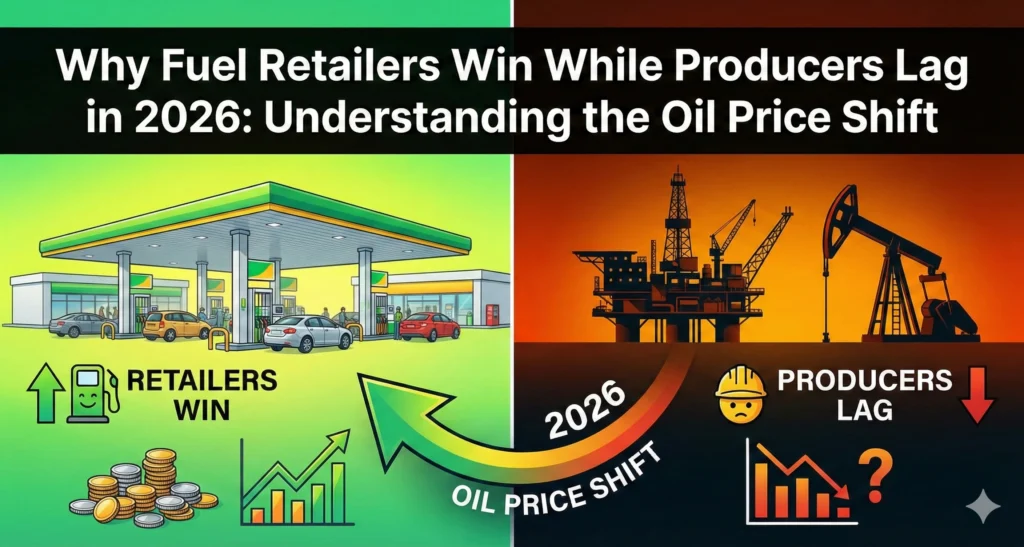
In 2026, fuel retailers and refiners are emerging as clear winners, while upstream oil producers are facing margin pressures. This shift is altering investment strategies, corporate performance, and the overall energy sector outlook.
Let’s break down why this divergence is happening and what it means for investors and consumers. to read Why Fuel Retailers Win While Producers Lag in 2026
Oil Prices in 2025–2026: The Big Picture
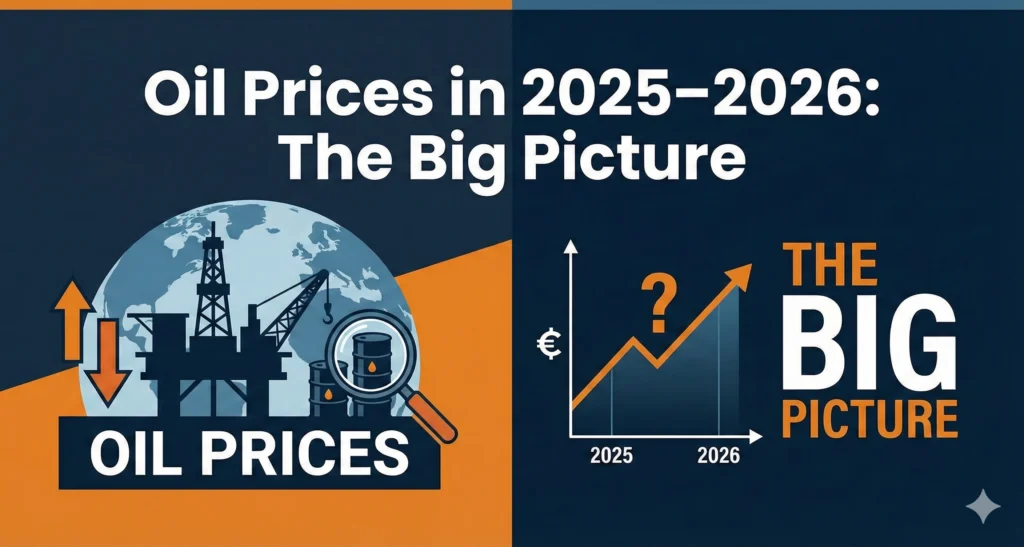
Oil prices softened through 2025 due to three primary factors:
- Rising US output
- Increased OPEC+ supply
- Weak global demand and swelling inventories
Brent crude averaged around the mid-$60s per barrel during much of 2025, compared to higher levels in previous years. Entering 2026, supply pressures continue, particularly with potential increases from Venezuela and other producers.
While lower oil prices generally reduce input costs for many industries, their impact across the oil value chain differs significantly.
The Refining Margin Boost: Why Fuel Retailers Win While Producers
1. Healthy Refining Margins
Refining margins—also called Gross Refining Margins (GRMs)—represent the difference between the cost of crude oil and the selling price of refined products like petrol, diesel, and jet fuel.
When crude prices fall, but product prices remain relatively stable, refiners benefit.
Recent data shows strong year-on-year growth in product margins:
- Gasoline (Petrol): ~68% jump
- Diesel: ~42% increase
- Jet fuel/Kerosene: ~62% growth
This margin expansion has significantly strengthened the refining segment.
2. Product Cracks Matter
A “product crack” refers to the spread between crude oil and refined products. Higher cracks translate into stronger profitability for refiners.
Even though crude prices declined sharply, product prices did not fall at the same pace. This mismatch helped oil marketing companies (OMCs) and refiners maintain healthy earnings.
3. Marketing Segment Stability
Oil Marketing Companies (OMCs) earn from selling petroleum products to end consumers. With moderated crude prices and relatively stable retail pricing mechanisms, their marketing margins have remained resilient.
Lower crude also reduces working capital requirements, improving balance sheet strength.

The Catch: Not All Benefit Equally
While refiners and fuel retailers celebrate margin expansion, upstream oil producers are feeling the heat.
Why Upstream Oil Producers Are Lagging
1. Direct Impact of Falling Crude Prices
Upstream companies—those involved in exploration and production (E&P)—sell crude oil. Their revenues are directly tied to global oil prices.
When oil prices decline:
- Revenue per barrel falls
- Cash flows weaken
- Profit margins compress
Unlike refiners, they cannot benefit from the price spread between crude and refined products.
2. Cost Pressures Remain
Production costs do not immediately decline with oil prices. Operational expenses, drilling costs, and capital expenditures remain significant.
For companies with higher break-even costs, lower crude prices can severely impact profitability.
3. EBITDA Contraction
Industry estimates suggest upstream producers may report EBITDA declines between 11% and 16% year-on-year, reflecting margin pressure in 2026.
Company-Wise Performance Expectations
Oil Marketing & Refining Companies
Indian oil refiners and retailers are expected to post strong year-on-year operating profit growth.
Projected EBITDA growth estimates:
- Indian Oil Corporation: ~102%
- Hindustan Petroleum: ~29%
- Bharat Petroleum: ~42%
These numbers reflect the refining margin boom and steady retail operations.
Upstream Producers
In contrast, exploration-focused companies like ONGC are expected to report declining earnings due to softer crude prices.
Oil and Gas Outlook for 2026
Crude Oil Outlook
Analysts suggest Brent crude may average around $58–60 per barrel in 2026, reflecting:
- Continued supply expansion
- Muted global demand growth
- Stabilizing geopolitical risks
If supply increases faster than demand, price softness may persist.
Natural Gas & LNG Trends
Liquefied Natural Gas (LNG) prices are also expected to moderate due to:
- New global capacity additions
- Expansion in US and Middle East exports
- Weak industrial demand in parts of Asia
Lower gas prices may support downstream companies but weigh on upstream producers.
The Structural Shift in the Energy Chain
The oil value chain has three key segments:
- Upstream – Exploration & production
- Midstream – Transportation & storage
- Downstream – Refining & retail
In 2026, downstream is outperforming upstream due to pricing dynamics.
This cycle may reverse if:
- Crude prices rebound sharply
- Product demand weakens
- Refining capacity expands significantly
Energy markets are cyclical. Today’s winners may lag tomorrow.
Investment Perspective: Where Should Investors Focus?
1. Favoring Refiners in Low Oil Price Cycles
Historically, refining companies perform better when crude prices fall moderately but demand remains stable.
Strong refining margins, stable marketing income, and improved cash flows make them attractive in the current phase.
2. Caution on Pure Upstream Plays
Exploration-heavy companies are more volatile and sensitive to price swings. Unless oil prices recover meaningfully, their earnings may remain under pressure.
3. Watch for Government Policies
Excise duties, subsidy mechanisms, and fuel pricing controls can impact OMC profitability. Any sudden tax hike may reduce margins.
Risks to Monitor
Even though refiners are benefiting now, investors must monitor:
- Geopolitical tensions (Russia-Ukraine, Middle East)
- OPEC+ production decisions
- Global recession risks
- Sudden demand shocks
Energy remains one of the most geopolitically sensitive sectors.
Experience-Based Insight: What This Means for Retail Investors
From a portfolio diversification standpoint:
- Energy stocks should not dominate portfolios.
- Investors should understand which segment they are investing in.
- A low crude price environment does not mean all oil companies benefit equally.
Many retail investors assume oil price decline is negative for the entire sector. In reality, it creates internal winners and losers.
Understanding segment-specific dynamics is critical.
Authoritative Takeaway
Lower oil prices in 2026 are acting as a double-edged sword:
✔ Boosting refining and retail margins
✔ Improving marketing segment stability
✖ Compressing upstream producer earnings
✖ Reducing exploration profitability
The divergence highlights the importance of analyzing business models within the energy sector rather than viewing it as a single homogeneous industry.
The oil market cycle in 2026 clearly favors fuel retailers and refiners over producers. Healthy refining margins, stable marketing earnings, and moderated crude prices are creating strong profit visibility for downstream companies.
However, upstream firms face declining realisations and tighter margins.
For investors, the lesson is simple: segment matters more than sector.
Energy remains cyclical, and staying informed about macro trends, supply dynamics, and pricing spreads is essential for making sound investment decisions.
Frequently Asked Questions (FAQ)
1. Why are fuel retailers benefiting from lower oil prices?
Fuel retailers benefit because their refining margins expand when crude prices fall but refined product prices remain stable. This increases profitability.
2. Why are oil producers struggling in 2026?
Oil producers sell crude oil directly. When crude prices decline, their revenue per barrel falls, compressing margins and earnings.
3. What is a refining margin?
Refining margin (GRM) is the difference between the cost of crude oil and the selling price of refined products like petrol and diesel.
4. What is the outlook for oil prices in 2026?
Analysts expect Brent crude to average around $58–60 per barrel due to global supply growth and moderate demand.
5. Are oil marketing companies a good investment in 2026?
They may perform well in a low crude price environment, but investors must consider government policy risks and overall portfolio diversification.
6. How do product cracks impact refiners?
Higher product cracks (spread between crude and refined products) increase profitability for refiners.
7. Will LNG prices also decline?
Yes, LNG prices are expected to soften due to increased global capacity and slower demand growth.
8. Can this trend reverse?
Yes. If crude prices rise sharply or product demand weakens, upstream producers may recover while refiners face pressure.
