
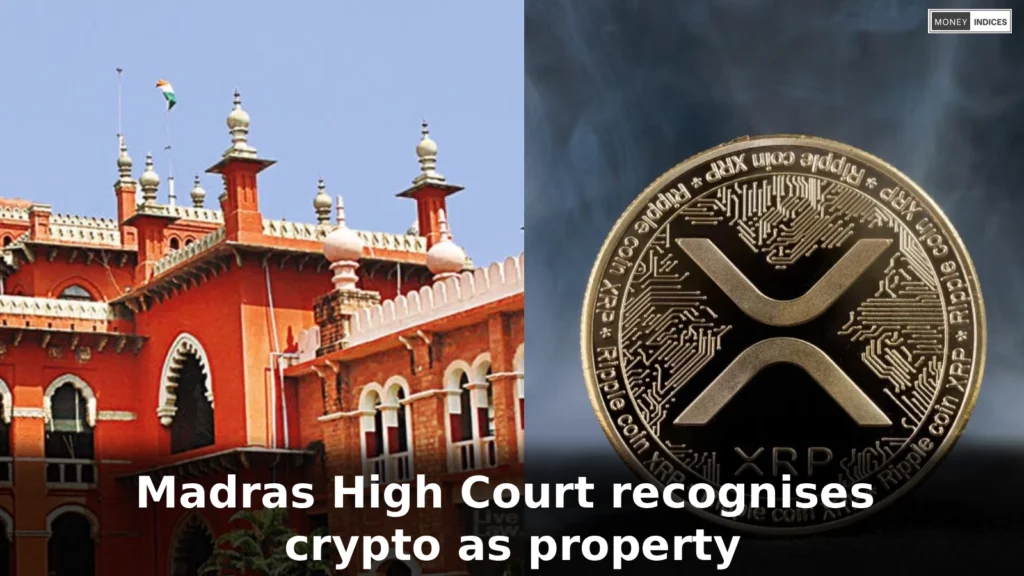
Madras High Court recognises crypto as property: Madras High Court Justice N. Anand Venkatesh, in his judgment, said that crypto will be treated as ‘property’ (asset) under Indian law.
This decision was made in a case against WazirX, a major crypto exchange that was hacked last year and lost $235 million worth of digital assets. The exchange had suggested a “socialization of losses,” which meant spreading the losses out among all users. But one investor disagreed, saying that her cryptocurrency holdings were her own and not part of the stolen pool.
The High Court’s temporary order not only backed up her claim, but it also set a strong example: crypto is a type of property that can be owned, held in trust, and protected by law.
What Did the Madras High Court Say?
The Madras High Court’s comment was clear and groundbreaking:
"Cryptocurrency is definitely a piece of property. It is not a currency or a physical object. But it is a property that can be enjoyed and owned (in a good way). It can be held in trust.In simple terms, the court said that crypto tokens, even though they aren’t real, have some of the same features as real property: they can be identified, transferred, and only controlled by private keys.
The court also said that exchanges couldn’t pool all of their users’ assets together to share losses, stressing that each user’s holdings are separate and protected by law.
What This Decision Means for Indian Investors
This decision is the first clear legal recognition of crypto as property in India. This gives investors stronger legal grounds in case of disputes, hacks, or exchange failures.
Let’s look at what this means for people who own crypto on a daily basis:
- Better legal protection
Crypto investors now have clear property rights, which means they can go to court if their assets are misused, frozen, or lost because of an exchange’s carelessness.
- Ways to fix property law
Investors can now use property law tools like injunctions, trusts, and claims for misappropriation to get their money back. These are strong legal ways to get their money back.
- Exchanges and custodians are more responsible for what they do.
The ruling makes it clear that crypto platforms have a duty to act in the best interests of their investors. They can’t just call themselves “facilitators” and not be held responsible if there are hacks or bad management.
- Assets must be kept separate or in trust.
Exchanges should keep user assets separate instead of putting them all together. This could change the way custody standards, transparency, and user protection are set.
- Safety during exchange hacks or freezes
If an exchange gets hacked, investors can now say that their individual holdings are separate property and not just entries in a database. This difference could be very important for getting the money back.


Bigger Effects on the Law and Rules
The decision does not automatically make crypto money or legal tender. But it does lay the groundwork for a future legal framework for crypto ownership and investor rights.
Legal experts think this decision could:
- Help Indian courts take charge of crypto disputes, even if the exchanges are based outside of India.
- Ask regulators like SEBI and RBI to speed up their work on a structured policy for digital assets.
- Make exchanges follow better rules for custody and reporting under Indian law.
Shardul Amarchand Mangaldas & Co. partner Shilpa Mankar Ahluwalia said:
"The ruling says that crypto assets are intangible property that can be owned and enjoyed, and it also says that platforms that hold these assets do so as fiduciaries."This means that crypto exchanges are responsible for the assets of investors, which is a big step toward holding them accountable and protecting investors.
Taxation Effects: What Will This Mean for You?
Now that crypto is considered property, it may be taxed like other capital assets. Here’s what investors should know:
- Capital Gains Tax: Selling or giving away crypto may still be subject to capital gains tax, just like before.
- Inheritance & Gifting: If crypto is treated like property, giving it away or inheriting it could mean having to pay taxes on it, just like you would on other assets.
- End-of-Year Valuation: Investors with a lot of money may need to include their crypto holdings in their annual asset disclosures.
- Inclusion in an estate: Crypto could be seen as part of an investor’s “estate,” which means it could be used to figure out how much wealth they have and how to pass it on.
In short, when you plan your taxes and your estate, think of your crypto as property.
New Clarity on Jurisdiction
Even if the platforms are based outside of India, Indian courts can now say they have jurisdiction over crypto-related cases. This could:
- Give Indian investors the power to seek justice in their own country.
- Encourage exchanges to follow Indian rules and regulations.
- Make people feel more confident in India’s growing crypto market by getting rid of gray areas in the law.
Industry Response: Exchanges Are Happy with the Change
Most crypto exchanges and industry leaders have welcomed the Madras High Court’s decision as a step toward protecting investors and making things clearer in the long run.
Edul Patel, the CEO of Mudrex, said:
“This decision makes it more likely that people will see crypto as a capital asset and makes investors more confident in the ecosystem.”
It is now expected that exchanges will improve:
- Following KYC and AML rules
- Separating funds
- Standards for openness and responsibility
This change also gets rid of platforms that don’t follow the rules or are weaker, making India’s crypto ecosystem safer and more trustworthy.
What Investors Should Know
- In India, crypto is now legally seen as property.
- You have more rights to your holdings, just like you do with property.
- Exchanges need to be responsible and act like trustees, not just middlemen.
- For tax and disclosure purposes, treat your crypto holdings like other capital assets.
- Only trade on regulated platforms that are open about what they do.
This decision strengthens what many investors have wanted for a long time: legal recognition, protection, and responsibility in India’s crypto space.
Crypto as Property in India
What did the Madras High Court say about crypto?
The court said that cryptocurrency is property, not money, which gives investors legal ownership rights.
Is this legal in India?
No, it’s not legal tender, but the law now recognizes it as an intangible asset that can be owned and protected.
What does this mean for investors?
If their assets are lost or misused, investors have better legal protection and can look for help under property laws.
How do exchanges like WazirX change?
Exchanges must act as trustees, keep user assets separate, and not use them to cover losses.
What will happen with taxes now?
Crypto could be taxed like capital assets, which means that capital gains and inheritance taxes could apply.
What happens if a hacker breaks into an exchange?
For better recovery rights, investors can say that their coins are separate property, not pooled assets.
Will this decision affect how crypto laws are made in the future?
Yes, it lays the groundwork for clear rules and policies for investors in India.
Follow for more: MoneyIndices!
