
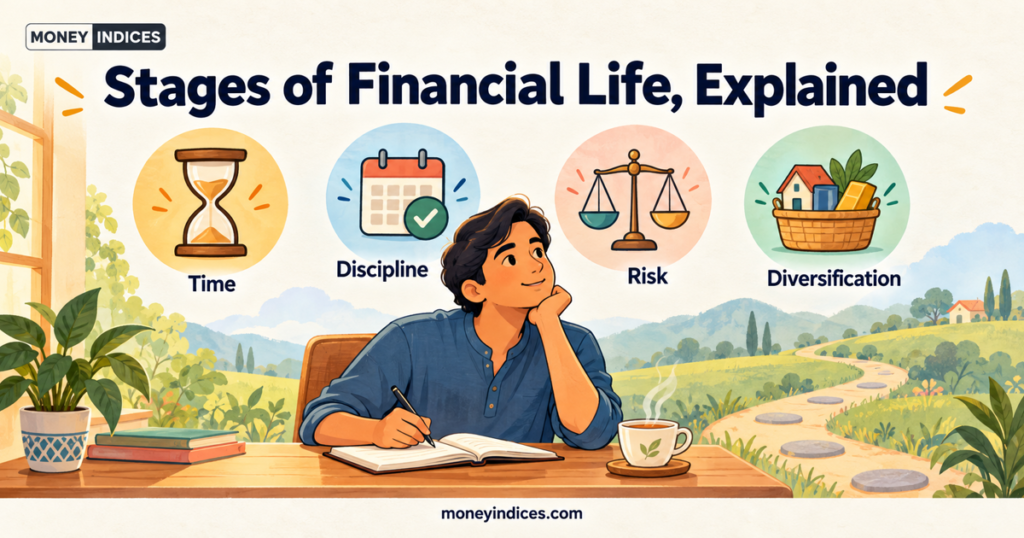
Moving through the stages of financial life is not just about money; it is also about thinking, discipline and patience. In fact, true prosperity comes when money becomes a means of creating a legacy, not just a means of fulfilling needs. Let’s look at how money priorities usually change across these five stages.
Five stages of financial life
This initial stage of life is very challenging, where as soon as each month’s salary ends, the wait for the next salary starts. At such a time, if a sudden medical expense, rent hike or any unexpected expense comes up, the entire budget collapses. Therefore, the biggest goal at this stage should not be investing, but creating an emergency fund. Keep an emergency fund that can cover 3 to 6 months of essential expenses.
Life becomes a little easier now, daily necessities, groceries, electricity bills and small moments of joy are all easily under control. Your savings now start to come into a rhythm and you feel in control of your money. The focus during this phase is on developing good financial habits, such as starting SIPs, taking health and term insurance and staying away from unnecessary expenses. However, this phase is fragile; if you take too large an EMI or increase unnecessary expenses, you can easily go back to the previous phase.
Now the comforts of life start increasing, such as a house, a car and holidays with the family, all of which are now possible. At this time, the focus shifts from ‘survival’ to planning. You start focusing on your children’s education, retirement fund and a diversified portfolio. The goal of investing is no longer just to save, but to aim for both growth and security. Remember, even as money grows at this stage, distractions also increase, and this is a big risk.
Now the worries of monthly budgeting end and experiences like luxury cars, foreign travel, premium healthcare, business class travel become a part of normal life. In this stage, the focus is not on spending, but on wealth preservation. Also, tax optimization and creating passive income sources become most important. Now your goal is not just to grow money, but to keep it safe for the long term.
Now your wealth starts working not only for you, but also for the next generations. Your goal is on estate planning, family office setup and philanthropy (charity and social service). This is the stage where money becomes a symbol of influence and legacy, rather than just a means of comfort. As the saying goes – “The secret to financial freedom is not in skipping steps, but in mastering each step.”
Investments in the securities market are subject to market risks. This article is for education only and is not investment advice. Mutual fund investments are subject to market risks, read all scheme related documents carefully.
Follow for more: money-indices.
